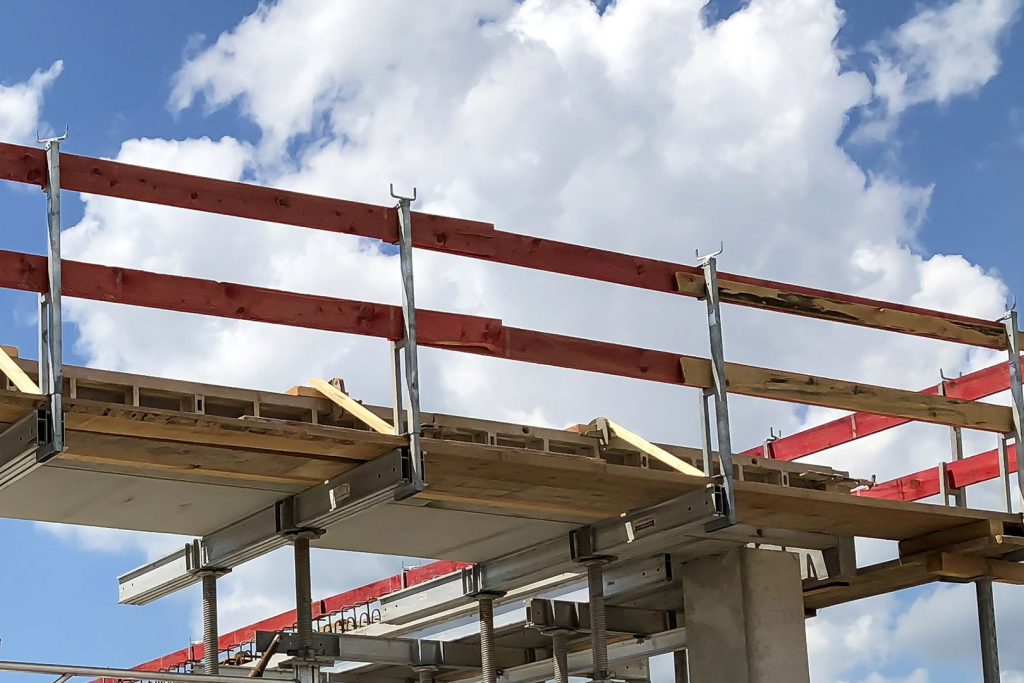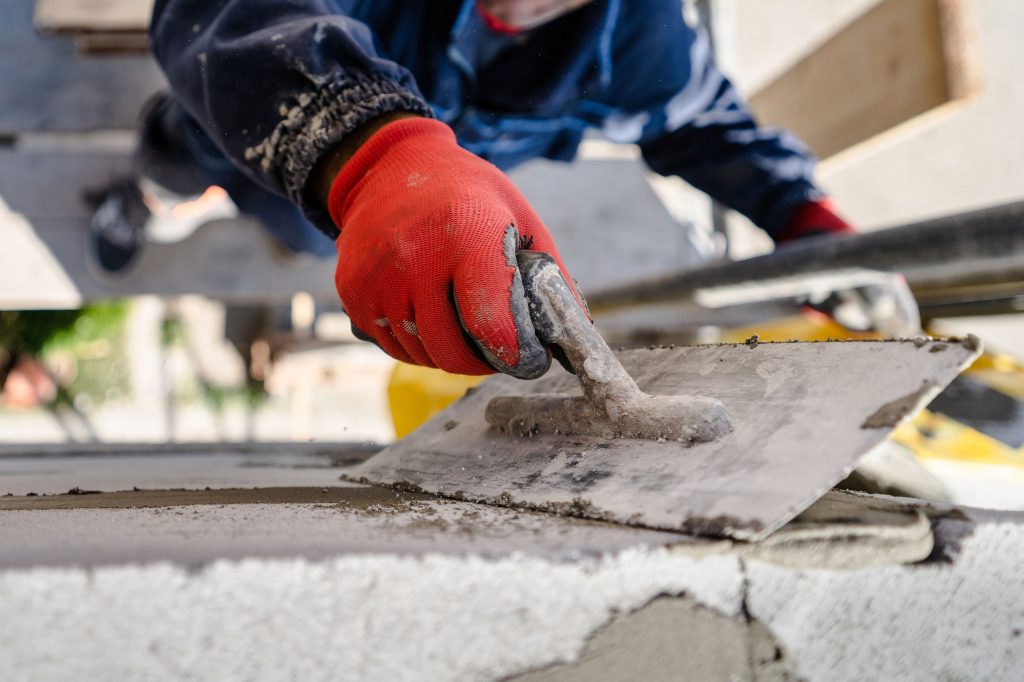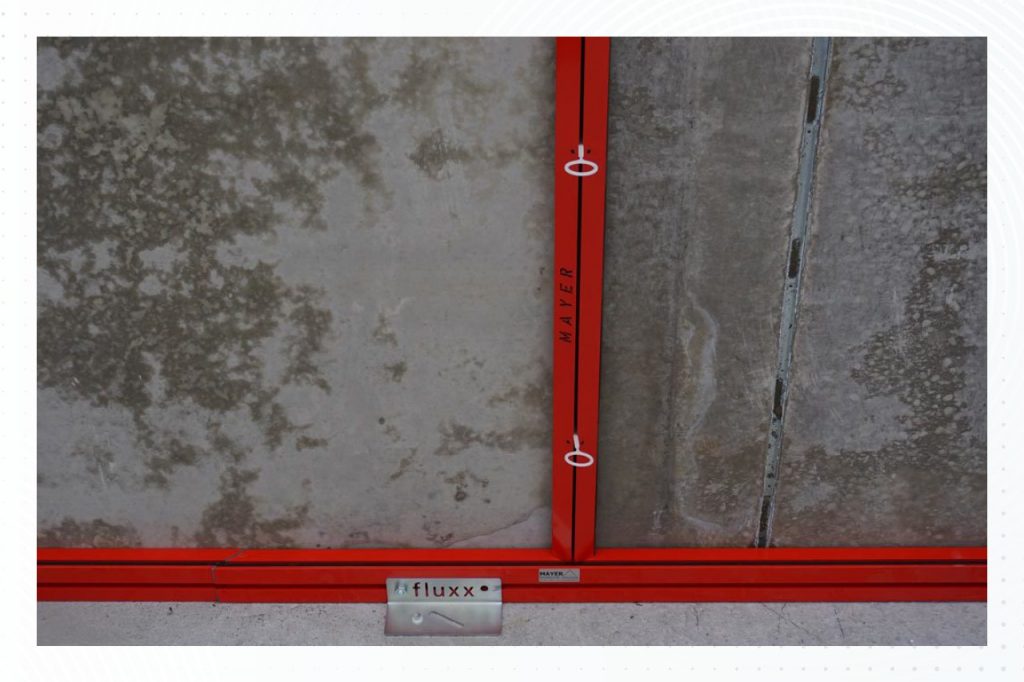
In addition to determining the shape of the structural element, the formwork also dictates its appearance. While these details are hidden in plastered or clad walls, they define the final surface appearance of exposed concrete. Every formwork joint and every anchor point is visible—unadorned and permanent. Achieving a high-quality surface, therefore, requires a great deal of precision. We’ll show you the requirements for exposed concrete and how the PRIMAX telescopic beam formwork meets them in practice.
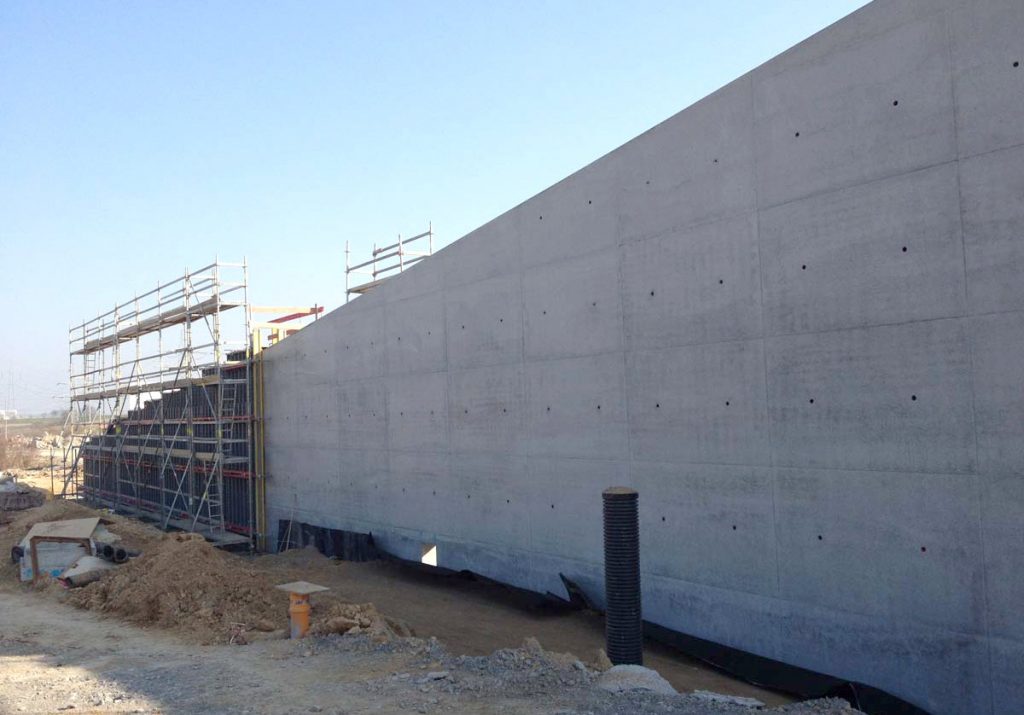
Exposed Concrete Classes: Anchor Pattern, Joint Grid, and Formwork Surface Make All the Difference
The DBV/VDZ technical guideline “Exposed Concrete” sets the framework. It distinguishes between four classes of exposed concrete, from SB1 to SB4, and defines requirements for texture, porosity, color uniformity, construction joints, and flatness. The overall impression of the finished surface is the decisive factor. For this reason, the guideline recommends a test area starting with class SB2. For SB3, it strongly advises this; for SB4, it is mandatory.
Hardly anything influences the aesthetics of an exposed concrete wall as much as the anchor holes and the formwork sheeting used. The higher the exposed concrete class, the more important it is to have a neat anchor pattern, a clean joint grid, and formwork panels that leave no visible screw or nail head marks.
Ensuring Flatness and Handling Varying Wall Heights
Deflection also plays an important role: To achieve a professional formwork result, the flatness tolerances specified in DIN 18202, Table 3, Row 7, must be strictly adhered to. To produce high-quality concrete surfaces, you need formwork that remains dimensionally stable even under high fresh concrete pressure. This is especially true for taller walls.
Another factor: Wall heights often vary multiple times within a single project. Systems that require special elements for this purpose consume additional material and thus quickly become uneconomical.

PRIMAX for exposed concrete surfaces: flexible and field-tested up to SB4
For surfaces with less stringent requirements, the modular wall formwork system featuring aluMAX and ultraMAX from Mayer Schaltechnik is a suitable and cost-effective choice.
For demanding projects up to exposed concrete class SB4, the PRIMAX telescopic beam formwork system, with its extensive adjustment options, is a proven solution.
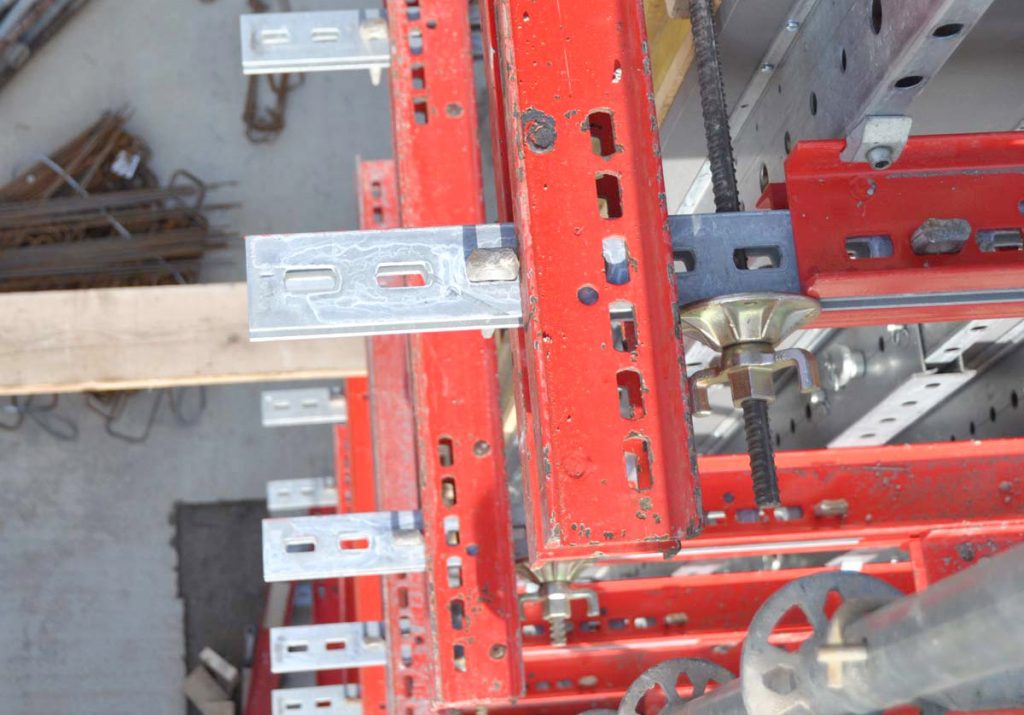
It combines flexibility with high load-bearing capacity. A galvanized steel beam grid, bolted header and sliding frames, and galvanized connecting plates ensure a dimensionally stable structure.
PRIMAX also demonstrates its strengths when it comes to anchoring. Ideally, the system requires only about 0.5 anchors per square meter of wall surface. The transoms can be positioned in 10-cm increments and adjusted continuously using the Vari clamps. These advantages were demonstrated, among other projects, at the Festspielhaus in Schweinfurt. There, several walls were constructed in exposed concrete classes SB2 through SB4. The foreman in charge summarized the benefits as follows:
“PRIMAX’s low anchor content and telescoping design offer enormous advantages for exposed concrete work.”
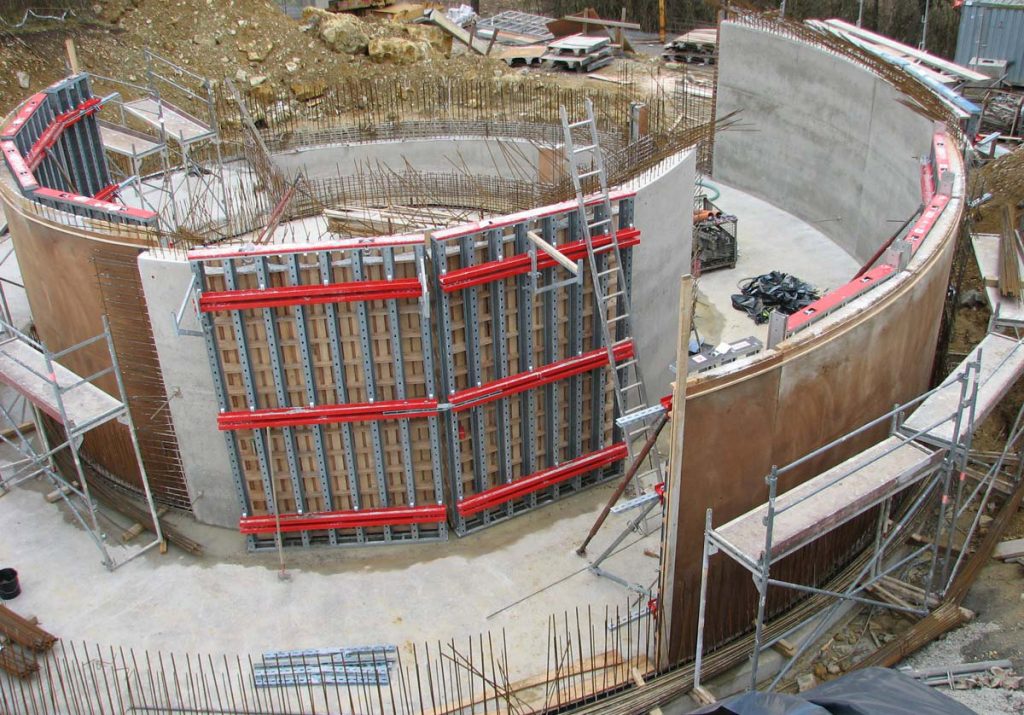
The telescoping design makes it easy to accommodate varying wall heights. The supports can be extended individually or as a complete grid. During the construction of a new church, PRIMAX easily adapted to heights ranging from a few meters to over 13 meters.
With its customizable formwork facing, PRIMAX offers additional options. The screw fastening on the back prevents frame and screw marks. The formwork facing can be quickly changed depending on the desired material. This proved beneficial at the training center in Erlangen: The project team tested several formwork facing alternatives. This allowed them to specifically prepare for the planned exposed concrete finish.
If you want even more control over the formwork results, supplement the formwork with MST neoprene sealing tape. It reliably seals vulnerable areas and helps ensure a high-quality surface down to the finest detail.
Many Requirements, One Formwork Solution
When selecting the right formwork for exposed concrete, the requirements for flatness, anchor placement, and formwork surface are crucial. PRIMAX meets these exact specifications with its well-engineered design—making it a consistently efficient investment regardless of the project.

Are you planning to build an exposed concrete wall and want to know which system is best suited for the job? Talk to our formwork experts.